Here is an example of RavenCoin mining on an RTX 3080 Ti where hashrate is not artificially reduced, you will get about 48 MH/s hashrate for KawPoW with stock settings. And while this would make RVN mining more profitable than ETH on this particular GPU, if the artificial ETH hashrate limiter wasn't present, ETH mining would be more profitable. And unlike miners, gamers won't be very happy to buy at such inflated prices, but don't forget that gamers will get performance close to that of the much more expensive RTX 3090 GPUs. Compared to the RTX 3080 or the RTX 3090, the new RTX 3080 Ti appears to have a slightly different graphics chip which features certain hardware modifications that impair the card's cryptocurrency mining performance. This means that bypassing the built-in mining limiter is going to be quite difficult.
Fortunately, in August 2021 developers of the NBMiner (the well-known cryptocurrency miner) have succeeded in partially unlocking the card's mining performance. For many owners of the RTX 3080 Ti this news brought a lot of relief, as the updated miner allowed their card to mine at a much higher hashrate. This means that with proper overclock settings and the right software, you can now increase the RTX 3080 Ti's base Ethereum mining hashrate from 57 MH/s up to 89 MH/s.

Nowadays even some other miners, such as T-Rex and GMiner, come with software unlocks for LHR cards. Continue reading down below to find out more how to unlock your RTX 3080 Ti's mining performance. Like the recently released Nvidia GeForce RTX 3060, which came with a mining hashrate limit imposed by Nvidia, the new GeForce RTX 3080 Ti also came "with a reduced Ethereum hashrate," making it less attractive to miners.

The just-released Nvidia GeForce RTX 3080 Ti is nearly equivalent in specifications to the RTX 3090 GPU, but has half as much video memory, meaning only 12GB of GDDR6X instead of the full 24GB. However, there is an Ethereum hash rate limiter that messes things up a bit for miners, but not for gamers, and the halved video memory should make it more affordable for gamers compared to the RTX 3080… in theory. Here is an example with RavenCoin mining on the RTX 3080 Ti where the hashrate is not being artificially reduced, you will be getting about 48 MH/s hashrate for KawPoW with the stock settings.
And although this will make mining RVN more profitable than ETH on this particular GPU, if the artificial ETH hashrate limiter was not present mining ETH would've been more profitable. And unlike miners, gamers will not be very happy to buy at these inflated prices, do not forget however that gamers will be getting performance very close to that of the much higher priced RTX 3090 GPUs. The just released Nvidia GeForce RTX 3080 Ti is almost equivalent in terms of specifications to an RTX 3090 GPU, but with half the video memory, so only 12GB GDDR6X instead of the full 24GB. The crypto currency Ergo is based on the Autolykos algorithm, which was updated in version 2 in early 2021. The Autolykos 2 algorithm is based on the PoW concept and can be efficiently calculated by a graphics card. When calculating Ergo Coins, ASICs have no efficiency advantage over modern graphics cards, which should make Ergo attractive for as many miners as possible.

The Ergo protocol is based on the blockchain and has been optimized for a very long shelf life. The hashrates were achieved under Hive OS with moderate overclocking settings. Image showing one of our first attempts of using the NBMiner with the GeForce RTX 3080 Ti LHRIn recent months, there have been major breakthroughs in unlocking mining performance of NVIDIA's LHR graphics cards. Provided that the developers of cryptocurrency miners keep looking for new solutions on how to bypass the built-in limiters on these cards, we may achieve even better mining performance in the near future. Right now, purchasing the GeForce RTX 3080 Ti for mining may not be the smartest option, especially due to its high price.
There are some much cheaper, yet equally efficient LHR graphics cards, such as the GeForce RTX 3060, which are worth checking out. The only major advantage of the RTX 3080 Ti is that it mines very fast, and that it's easier to obtain than the RTX 3080, or the extremely expensive GeForce RTX 3090. The Colorful RTX 3080 Vulcan is an example of a 3080 model with better VRAM cooling than Nvidia's reference card, so the memory didn't get quite as hot. However, we still found we achieved the best result by dropping the power limit to 80-90% and then setting the GPU core clocks to the minimum possible value in MSI Afterburner (-502MHz).
Then we overclocked the memory by 750MHz base clock, which gave a final speed of 20Gbps (the Ampere cards run at 0.5Gbps below their rated memory speed when mining). That yielded similar hash rates of 93MH/s, while fan speed, GPU temperature, and power consumption all dropped. Most importantly, at the same performance as the 3080 FE, GDDR6X temperatures stabilized at 100C. It's not ideal, but at these temperatures a 4C difference can be significant. But theLHR GPUswere, actually, doing a pretty good job at halving their cryptocurrency mining performance. A few of these graphics cards were put to the test , and they did show an effective halving of their Ethereum hash rates.
It doesn't look like they're doing what NVIDIA intended them for, though. Interestingly enough, the GeForce RTX 3080 Ti's hash rate limiter also affects some lesser-known Altcoins, such as Ethereum Classic, Ergo, and RavenCoin. The only known cryptocurrency that appears to be unaffected so far is ConFlux.

Unfortunately, we don't know if the miner in question tried any known workarounds. So Prima facie, Nvidia's hash rate limiter seems to be ironclad this time around. Whether or not it helps gamers secure more graphics cards for themselves remains to be seen.
One of the reasons Nvidia's graphics cards are so expensive is cryptocurrency mining demand. The RTX 3070 Ti, 3070, and 3080 all come with the Lite Hash Rate GPU core. This GPU core delivers identical performance while limiting the Ethereum hash rate, which should help lower demand from miners. If you're a miner yourself, you might want to consider a card from AMD instead. NVIDIA is hoping that applying a hash rate limiter to some of its graphics cards will help get more units in the hands of actual PC gamers, rather than miners, who the company is serving with CMP HX parts. It is not a great option for mining Ethereum (relative to the card's cost), and it looks like the hash rate limiter nerfs a few other cryptocurrencies as well.

We've run these benchmarks using NiceHash Miner, looking at actual realtime hash rates rather than the results of its built-in benchmark. We tested each graphics card in stock mode, and then we also attempted to tune performance to improve overall efficiency — and ideally keep temperatures and fan speeds at reasonable levels. We let the mining run for at least 15 minutes before checking performance, power, etc., as often things will slow down once the graphics card starts to heat up. A workaround to the forced hash rate limiter for Nvidia GeForce RTX mining Ethereum, and apparently it's pretty simple. You just need to use developer driver version 470.05, where apparently no hashrate limiter applies, unlike the regular GeForce video driver you normally load for these graphics cards. Barring a repeat of that situation, the GeForce RTX 3080 Ti should not see much traction among miners, or at least those who want to mine Ethereum and few other digital currencies.
A leaker on Twitter posted some preliminary mining results, which show ho-hum hash rates from such a powerful graphics card—just around 57MH/s for Ethereum, and 23MH/s for Ravencoin. Not bad in general, but also not great, given the amount of GPU horsepower. NVIDIA's limiter also restricts mining performance on Ethereum Classic and Ergo. General performance parameters such as number of shaders, GPU core base clock and boost clock speeds, manufacturing process, texturing and calculation speed.

These parameters indirectly speak of performance, but for precise assessment you have to consider their benchmark and gaming test results. Note that power consumption of some graphics cards can well exceed their nominal TDP, especially when overclocked. This new LHR mode mining update for NVIDIA GeForce RTX 30 series is compatible with both Linux & Windows systems on existing NVIDIA drivers. Based on the changelog, it looks like the developers are also working to make this unlock work on other mining algorithms. While this is good news for miners, it isn't actually good news for the gaming segment which has only now started seeing some recovery in terms of supply, availability, and overall prices.
This update can potentially lead to a surge in demand for LHR graphics cards which could lead to an even worse gaming GPU shortage. The three main NVIDIA GeForce RTX 30 LHR series graphics cards that are shown in the tests are all 'Ti' variants, the RTX 3080 Ti, RTX 3070 Ti, and RTX 3060 Ti. NBMiner is also expecting to unlock higher performance in the coming updates but that remains to be seen. The new Nvidia GeForce RTX 3070 Ti, due to hit the market in a few days, will also offer a nice hardware upgrade over the older RTX 3070 GPU, but like the RTX 3080 Ti, it will come with an artificial Ethereum hash rate limiter.

Again, some other memory intensive algorithms other than Ethash may also suffer, though not all, and GPU intensive mining will probably not suffer, and the performance there should be slightly higher than on the RTX 3070. Ethash is the Proof-of-Work algorithm used for the crypto currency Ethereum. Ethash is based on the Dagger-Hashimoto algorithm, but has been significantly changed in some places. For example, the memory requirement was significantly increased in order to make it more difficult or even to prevent the calculation of the algorithm on so-called ASICs .

Our benchmark results are based on a slight overclocking of the graphics card and the GPU memory. Again, maxing out fan speeds and memory clocks while dropping the GPU core clocks and power limit are key to improving overall hash rates. Modding the card and replacing the VRAM thermal pads with thicker/better pads is possible and will help cooling and performance. We'd prefer using an RTX 3080 with better GDDR6X cooling, however. Which brings us toa card that we've since removed from the charts. The crypto currency VertCoin is calculated with the new Verthash algorithm since January 2021.

This is a very memory-intensive PoW algorithm that is difficult to calculate with an ASIC. The developers have set themselves the goal that VertCoin should be calculated via a graphics card and not with so-called ASICs. Verthash currently requires a graphics card with at least 2 GB of memory. The KawPoW algorithm has been used with the crypto currency Ravencoin since May 2020. KawPoW is a Proof-of-Work algorithm and is calculated the fastest with a modern graphics card.

KawPoW is based on a changing algorithm and can therefore not be calculated via ASIC. The developers want to protect Ravencoin from large mining farms that often use ASICs. In addition to Ravencoin, other cryptocurrencies are based on KawPoW, including Hilux and Gravium. No more traditional mining, in other words, and by extension, there is no point in hoarding graphics cards to mine Ethereum, even if a hash rate limiter did not exist. That is why it is nice to see NVIDIA focusing its hash rate limiter on other digital coins, even if they are not as popular. It does not work across the board, though—the leaker notes seeing good results mining Conflux, which uses the octopus algorithm.

The results apply to mining efforts in both HiveOS and Windows, with the graphics card running at stock settings. It is noted that overclocking the GPU does increase the hash rate "but not by much." Additionally, the aforementioned developer driver does not get around the situation, and neither does a fan trick in HiveOS. Hopefully this attempt works out better than it did for the GeForce RTX 3060. NVIDIA attempted to gimp mining performance for that card as well, but the effort was quickly undone when a developer driver that removed the hash rate limiter found its way to the web. It did not work for all graphics cards, but users reported success with a bunch a models from ASUS, EVGA, Gigabyte, and others. If you've pulled up data using a mining profitability calculator, our figures indicate there's a lot of variation between power and hash rates, depending on your settings and even your particular card.

Don't be surprised if you don't reach the level of performance others are showing. Ethereum GPU mining remains profitable, at least until it shifts to proof of stake around January. But there's more to it than just firing up the software and letting it run in the background, especially if you've managed to procure one of the best graphics cards or best mining GPUs.

Most of the graphics cards in our GPU benchmarks hierarchy can earn money right now by mining, depending on how much you pay for power. However, you'll want to tune your graphics card with the optimal settings, and the brand and card model can have a big impact on overall performance and efficiency. So, performance wise mining Ethereum the RTX 3080 Ti should've been normally capable of delivering the same hashrate as an RTX 3090 does currently. Something around 100 MH/s with stock settings and about 120 MH/s with clocked memory and reduced power usage could've been possible, but instead we are getting just around half of that in reality.

This information brings hope for Crypto miners who have been tired of the graphics company cracking down on the pricing of the cards by releasing hashing algorithms. However, this also means that we can expect a sudden boom in the pricing and amount of the graphics cards and once again this will make things much harder for the gamers to get their hands on the graphics cards in the future. First of all, download the latest versions of the MSI Afterburner and HWiNFO64. Use MSI Afterburner to manually set core clock, memory clock and power limit values for your graphics card.

We strongly recommend using the HWiNFO64 tool to closely monitor core clock and VRAM temperatures. If you notice any unusual behavior with your graphics card, immediately revert to default settings. Stepping back one generation further to Pascal (GTX 10-series), the approach changes a bit. Maximum memory clocks are still critical, but core clocks start to matter more—the architecture isn't tuned for compute as much as Turing and Ampere. We got our best results by overclocking the GPU core and memory speed, but then setting a power limit.

Except, being nearly four years old, two of our GPUs really weren't happy with memory overclocking. Anything more than a 200MHz bump on the 1080 caused a hard PC crash, and while the 1070 managed +500MHz, our hashing results were still a bit lower than expected. As with the launch of throttled RTX 3060 cards, NVIDIA says that they are doing this to better ensure that GeForce cards make it to gamers, as opposed to being conscripted into mining farms.
Overall, this is part of a larger overall NVIDIA strategy to respond to the rise of Ethereum and the resulting crush of demand in the short term and the long term. Ideally, NVIDIA would like to shift Ethereum miners over to their CMP series of dedicated mining cards, which fetch higher prices don't compete with GeForce cards. With a bit of overclocking, then, the RTX 3080 Ti could be a great gaming alternative to the RTX 3090, even if it has just half the VRAM. The RTX 3090 might carry the GeForce moniker meant for gaming, but there aren't any games that use that amount of memory yet, anyway, placing it firmly as a productivity GPU. But let's be honest, you might not be able to buy a graphics card until the second quarter of 2022, so it's going to be difficult to get your hands on either.
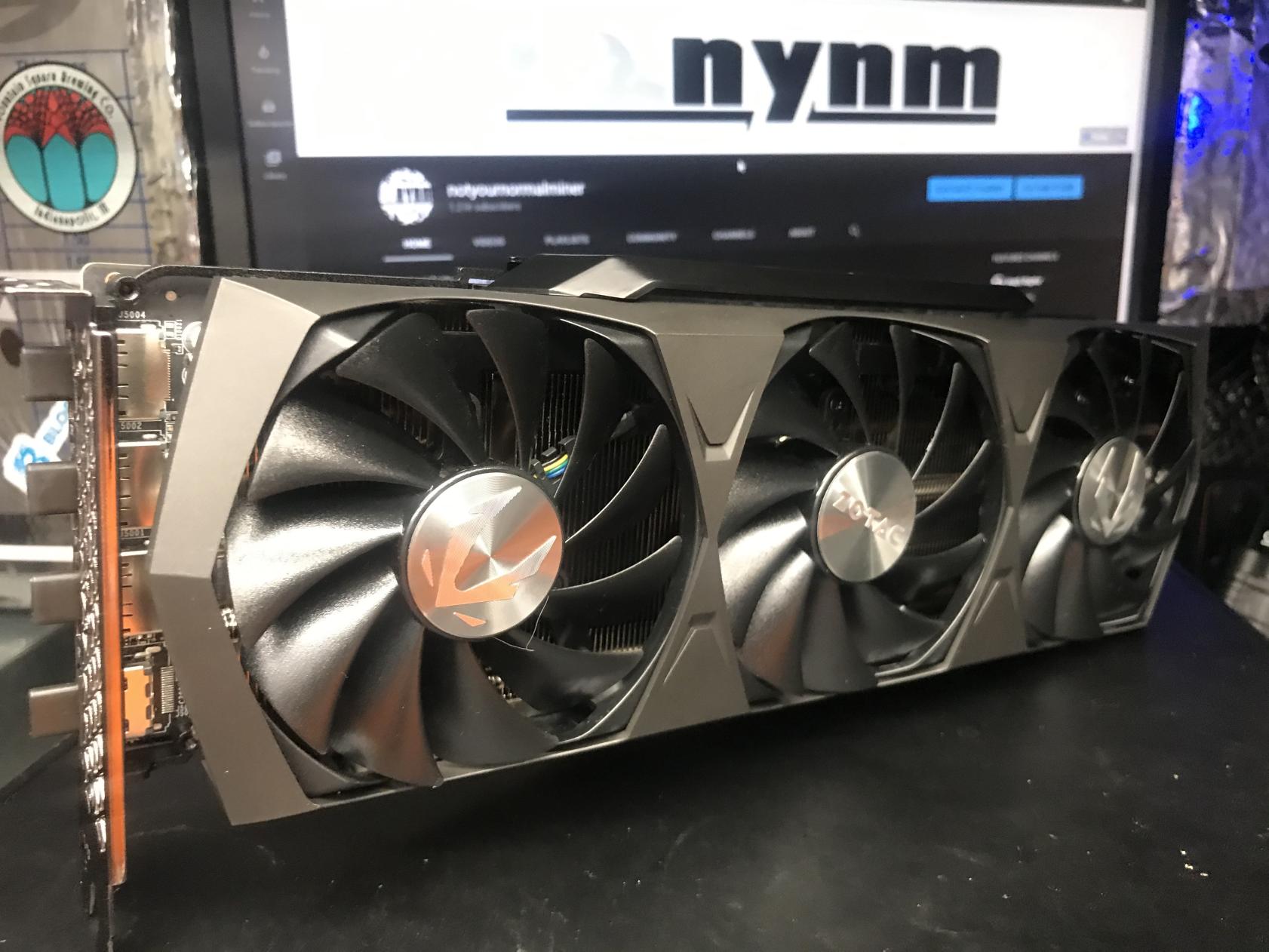
The default settings for the RTX 3080 Ti from Palit/Gainward we have tried give us 325W of power usage as reported by the miner. Many expected that this will be an Unbreakable solution from stopping the Crypto miners from making use of the graphics cards which were made for Gamers. However, according to the latest information, some folks have managed to partially unlock the mining hash rate on NVIDIA's GeForce RTX 30 LHR GPUs. Nvidia is also competing with the reality of the market right now, as demand has been outpacing supply for more than six months.

Nvidia has introduced a hash rate limiter for Ethereum cryptocurrency mining on new versions of the RTX 3080, RTX 3070, and now this RTX 3080 Ti. It could help deter some scalpers, but we'll need months of data on street prices to really understand if it's driven pricing down to normal levels. Anthony joined the TweakTown team in 2010 and has since reviewed 100s of graphics cards. Anthony is a long time PC enthusiast with a passion of hate for games built around consoles.

FPS gaming since the pre-Quake days, where you were insulted if you used a mouse to aim, he has been addicted to gaming and hardware ever since. Working in IT retail for 10 years gave him great experience with custom-built PCs. A few hours ago, we reported how the latest NBMiner update had partially unlocked the mining hash rate on NVIDIA's GeForce RTX 30 LHR series graphics cards.
The first mining numbers are in and show that these cards are actually delivering up to 70% of their mining capability within the Etherum mining algorithm. Ethereum performance aside, NVIDIA says that the upcoming LHR GeForce cards are functionally identical to the original generation GeForce 30 series cards as far as compute and gaming performance go. For our part, we have not seen the Ethereum throttle trigger in other use cases on the RTX 3060, so we're not expecting different behavior on the more powerful GeForce cards. For better or worse, Ethereum has a very distinct workload (memory bandwidth bound and comprised almost entirely of random-access operations), so it's rather easy to tell apart from games and even other compute workloads. Last month, Nvidia implemented a special system to reduce the hash rate of Ethereum mining on its new RTX graphics card.


